



NEWS
Sales Are Growing, Customers Are Increasing, But Profits Are Stagnant? These Could Be Five Upgrade Signals for Food Factories
2025-12-04
For many small and medium-sized food factories, relying on manual labor in the early stages is a common choice—labor is easy to find, and initial investment is relatively low. However, as business expands and orders increase, once-manageable challenges gradually evolve into bottlenecks that hinder growth.
If you’re starting to feel that production can’t keep up, hiring is difficult, quality is unstable, and costs keep rising, these may be clear signals that it’s time to introduce food processing machinery. This article outlines five key signs to help you decide whether to upgrade through mechanization, enabling steady growth and freeing your business from recurring issues.

Signal 1: Orders are surging, but production can’t keep up
Many food factories start with small teams manually handling everything from ingredient preparation to packaging. However, as orders grow rapidly, labor becomes increasingly insufficient. Even with extended working hours, issues like delivery delays or having to turn down orders become frequent, potentially leading to missed opportunities. If you feel you’re “operating at full capacity but still falling short,” it may be time to introduce machinery that can work consistently and efficiently, significantly boosting production capacity.
Signal 2: Unstable product quality affects customer trust
Standardization in food production is crucial, especially when expanding to larger clients, supermarkets, or retail chains. Relying entirely on manual processes can lead to inconsistencies in product size, flavor, and mixing uniformity. Such variations not only damage brand reputation but also increase waste and rework costs. If you notice that “today’s product isn’t the same as yesterday’s,” mechanization may be the key to achieving consistent quality.
Signal 3: Overtime is the norm, but profits aren’t growing
While labor may seem more cost-effective than machinery on the surface, frequent overtime brings hidden costs: overtime wages, errors due to fatigue, and losses from rushed work. If you feel “busier than ever, but profits aren’t rising,” your current production system may have reached its limit. Investing in equipment can reduce reliance on labor and turn unpredictable hidden costs into manageable, stable expenses.
Signal 4: It’s getting harder to find the right people
The food industry today faces challenges in recruiting, retaining, and training skilled workers. A single vacancy or turnover on the production line can disrupt the entire process. If you often struggle with “not finding enough people” or “new hires taking too long to train,” it may indicate that relying solely on human labor is no longer sustainable. Machinery can handle repetitive tasks, allowing your existing team to focus on technical improvements and process optimization.
Signal 5: Want to expand your market but limited by current capacity
Many factories face the dilemma of receiving orders from large clients or retail channels but having to decline them due to insufficient capacity or inconsistent quality. If you see market opportunities but hesitate because of production limitations, this is a strong signal that it’s time to upgrade your production line with machinery that ensures both output and standardization.
Conclusion: Is your factory at the point of upgrading?
Growing a food factory isn’t just about increasing sales—it’s about being able to confidently seize new opportunities. If your current production line has shifted from being a “driver” to a “constraint,” it may be the right time to consider introducing food processing machinery.
The right equipment can not only speed up production but also help stabilize quality, control costs, and expand your reach, laying a solid foundation for entering supermarkets, retail chains, or even export markets.

Thinking about your next steps?
- Unsure which equipment best suits your production line?
- Want to increase capacity without continuously adding more staff?
- Looking to build a more efficient, cost-effective production line that truly drives growth?
With over 30 years of industry experience, Xinbo Zhike understands the pain points of small and medium-sized factories and is committed to providing tailored solutions. We’re here to help you explore the path to upgrading your factory—feel free to reach out anytime.


Latest News
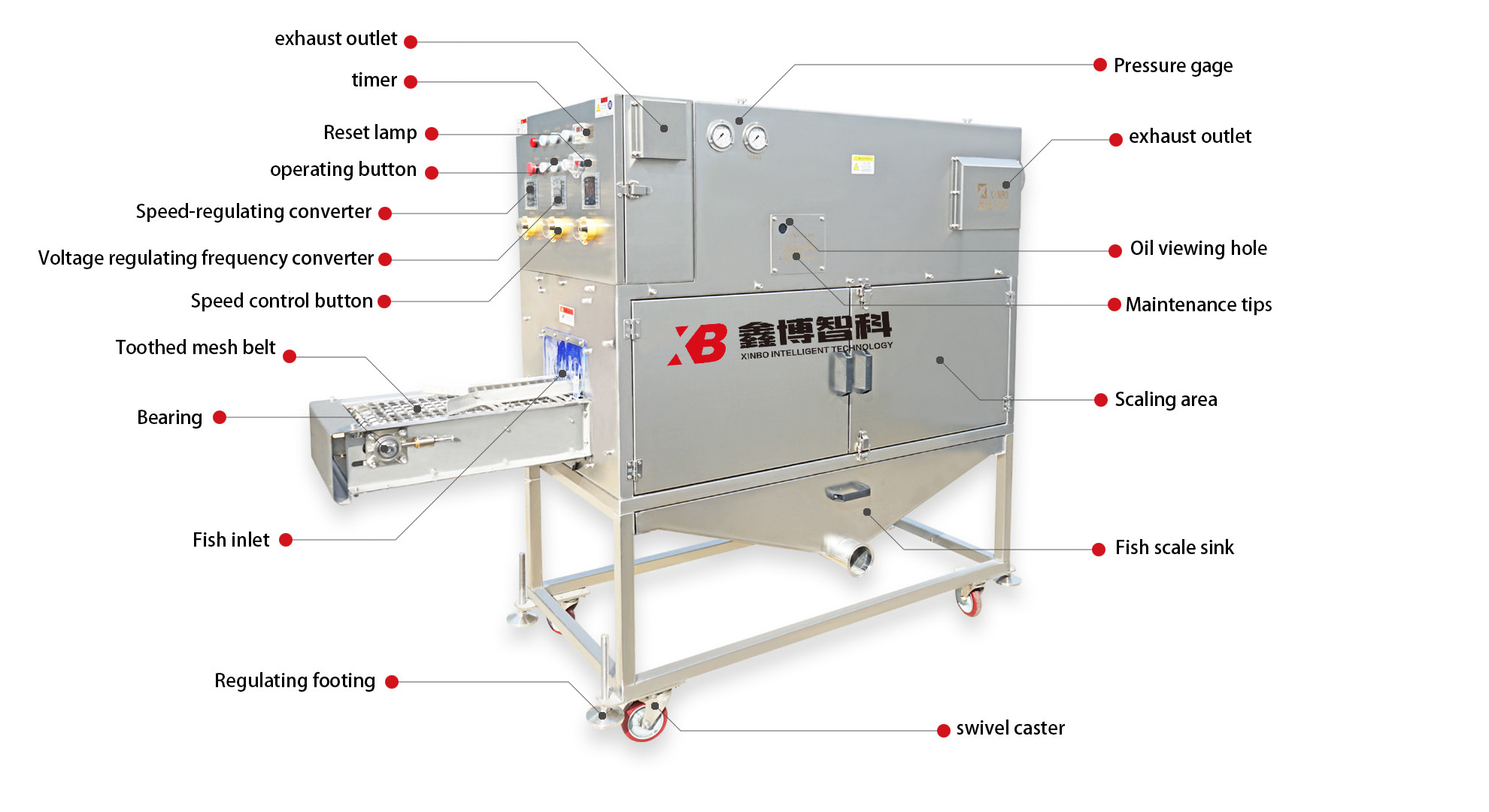
Revolutionizing Fish Cleaning: The Electric Fish Scaler Drum Machine
The electric fish scaler drum machine is a powerful device designed to simplify the daunting task of scaling fish. Traditional methods of fish scaling often require considerable manual effort and can be messy and time-consuming. This innovative machine addresses these challenges by providing an efficient, hygienic, and user-friendly solution. At its core, the electric fish scaler drum machine uti
2026-07-08
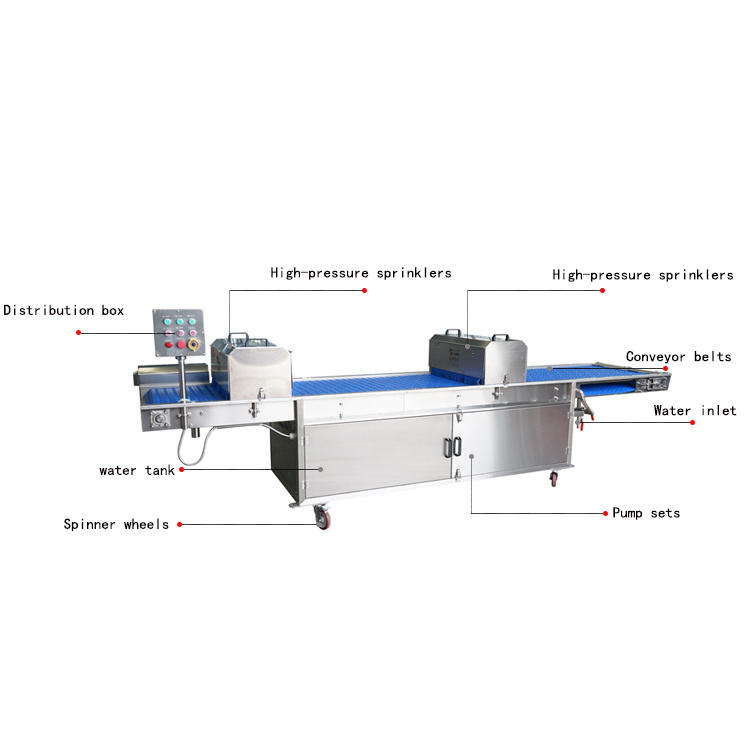
Industrial Fish Processing Automation Line for Efficient Seafood Production
Industrial fish processing automation line provides automated cleaning, cutting, sorting, and packaging solutions to improve seafood production efficiency and product quality.
2026-07-08
Sustainability in Seafood: How Salmon Processing Machines Drive Eco-Friendly Practices
Sustainability in Seafood: How Salmon Processing Machines Drive Eco-Friendly Practices Introduction to Sustainability in the Seafood Industry In recent years, the seafood industry has faced increasing pressure to adopt sustainable practices. Consumers are becoming more conscious of their choices, demanding seafood that is not only delicious but also environmentally friendly. This shift in consumer
2026-07-05

Copyright 2023 Rizhao Xinbo mechanical equipment co., ltd. All rights reserved Powered by www.300.cn seo Tag